
BCMM news
On the BCMM side, we've continued polishing the project, with most of that work focused on testing and fixing issues found across various mod configurations.
Neo Cheyenne
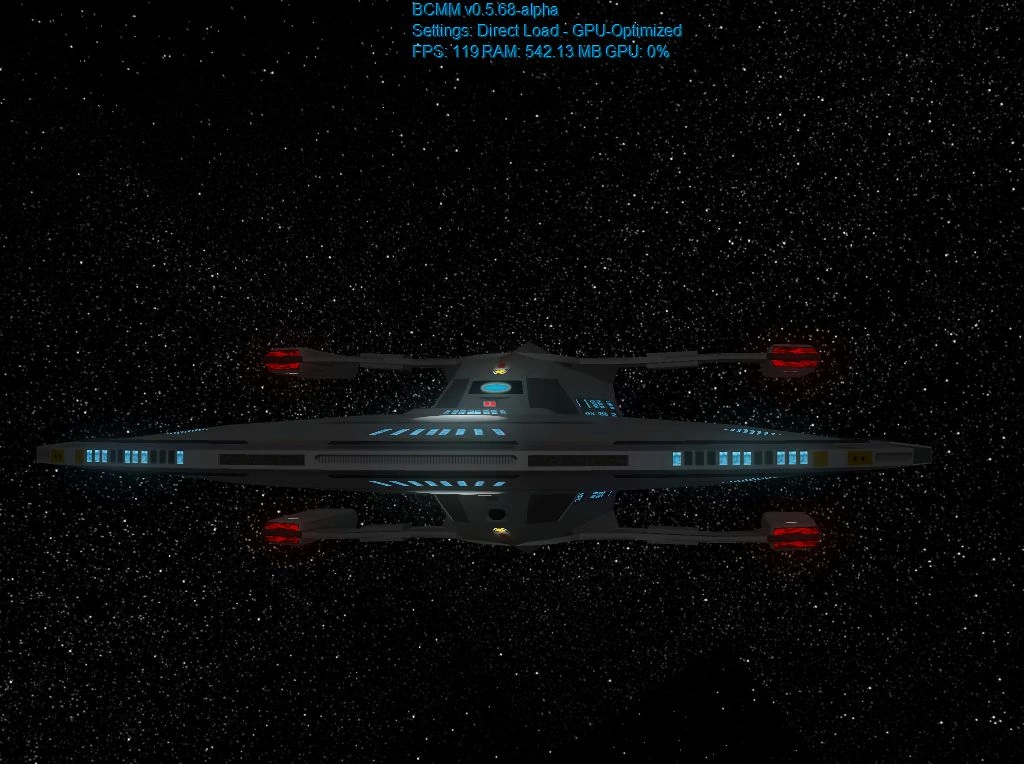
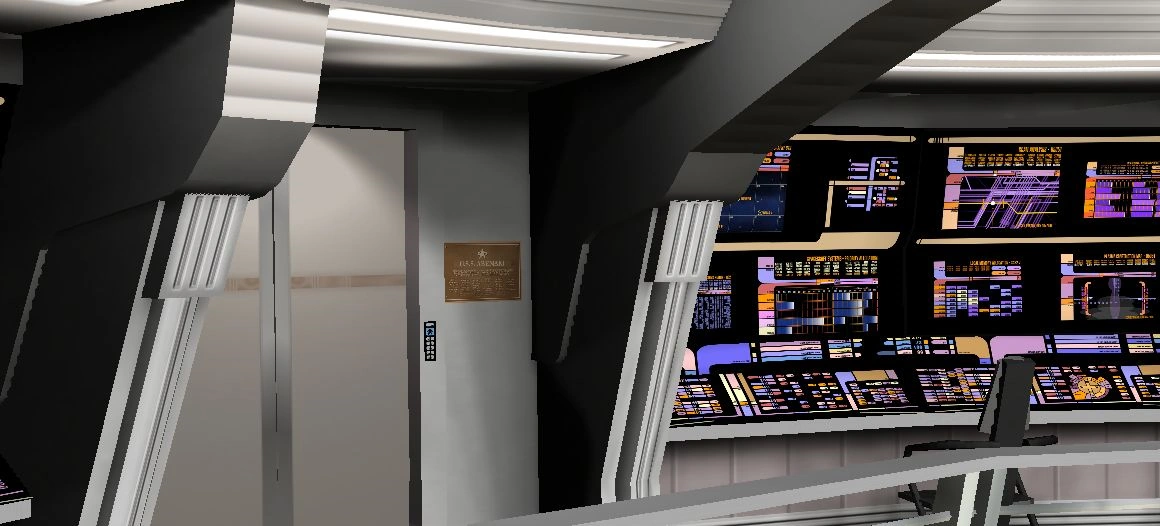
The Neo Cheyenne is a labor of love by Adonis, with additional texture, mesh, and hardpoint work by Blackrook32. The package also includes a lovely bridge for the ship, thanks to more great work by BR32.
As always, BR wrote a short backstory for one of the ships:
U.S.S. ABENAKI - NCC-75440
Ship History (Synopsis)
Captain: Nehemiah Grey
Executive Officer (XO): Commander Karl Shriver
Tactical Officer: Lieutenant Jean-Claude Mauriat
Science Officer: Lt. Cmdr. Clarissa Grey
Helm: Ensign Damian L. Kelso
Chief Engineer: Lieutenant Commander Mordechai Garni
Commission and Mission
The U.S.S. Abenaki was commissioned on Stardate 56184.9 at the Utopia Planitia Dockyards under the command of Captain Nehemiah Grey.
The Neo Cheyenne Mk. II was part of a new fleet developed in the aftermath of Wolf 359 and the Borg invasion. The class has since evolved through three production phases, incorporating weapons tested in the field during times of crisis. Among them was the deflector pulse first devised by Lt. Cmdr. Geordi La Forge and Lt. Cmdr. Data. This promising weapon was later refined into a "Force Lance" compression beam.
The Neo Cheyenne class is designed for both defensive and offensive combat situations, with the flexibility required for multi-role fleet engagements and border patrols.
The Abenaki was on patrol near the Breen border in Sector 498 when she encountered a Bajoran freighter under attack by the Breen. Responding to the freighter's distress call, the Abenaki arrived to find only the hulk of a vessel. Something was wrong: it was the missing freighter Osiris Star, a ship that had disappeared more than 200 years earlier.
Suddenly, five Breen warships decloaked in front of the Abenaki. Different classes, all equipped with cloaking devices—it was clearly a trap.
Fighting just outside the enemy's border with the Federation, nearly 1.5 light-years from the Badlands, the Abenaki found herself surrounded by Breen forces.
Hunted relentlessly by Breen capital ships, Captain Grey led the Abenaki in a desperate fight for survival, evading pursuit while suffering massive damage across all decks.
Even with the ablative armor holding by a razor's edge, damage continued to mount. Out of desperation, Captain Grey ordered the Abenaki into the Badlands. After 15 hours of evading the turbulent plasma storms, the Breen ships' weapons had weakened and their cloaking systems had become unreliable. Those disadvantages finally gave the Abenaki the upper hand. One by one, she used her Force Lance beam to destroy the capital ships while using the Badlands themselves to evade enemy fire and draw the Breen deeper into the storms.
Escape to Federation Space
The Abenaki fought for every kilometer as she attempted to break out of the Badlands. Long-range sensors eventually detected a Klingon warship on an intercept course.
Determined to return home, Captain Grey ordered the Abenaki to make a dash for Bajor—he had endured enough of the Badlands.
Under heavy fire, the Abenaki's Force Lance array was damaged by repeated Breen energy-drain attacks, leaving the ship's primary defense close to failure. Even so, the battered vessel pressed on toward the wormhole.
At this crucial moment, a Klingon Vor'cha-class cruiser came to the Abenaki's defense, engaging the remaining Breen battlecruisers. Chief Engineer Garni managed to bring the Force Lance array back online just as one of the Breen cruisers began an attack run. The Breen vessel had closed to less than 500,000 meters when the Force Lance obliterated it.
Captain Grey ordered the Abenaki to come about, joining the Klingon Vor'cha in destroying the last remaining Breen warships.
Starfleet Intelligence later concluded that the Breen ambush of the Neo Cheyenne class had been an attempt to assess the ship's capabilities against the various classes in their arsenal. Even more disturbing, the Breen appeared to have developed their own version of a cloaking device.
This confirmed reports from Ferengi sources that salvage activity at former Dominion battle sites in the Alpha Quadrant had been unusually high before those sites could be properly secured. The Breen had apparently recovered enough technology to develop a disturbing new capability for their arsenal.
Thanks to the efforts of the crew of the U.S.S. Abenaki, the sensor data the Breen hoped to gather from the ambush was disrupted by the turbulence of the Badlands' plasma fields.
Honors and Refit
In honor of her service and survival, the U.S.S. Abenaki was inducted into the prestigious 1st Battle Fleet, commanded by Fleet Captain S'Var, on Stardate 57400.9.
The crew received commendations for bravery, including the distinguished Starfleet Medal of Valor.
The Abenaki is currently undergoing a major refit at Earth Dockyard Alpha under the watchful eyes of Chief Engineer Garni and Captain Grey.
The crew has been granted a two-month furlough on Risa.
Present Day
The U.S.S. Abenaki is now on patrol near the Breen/Cardassian Neutral Zone.
Ship Screenshots


Bridge Screenshots


HP Balancer
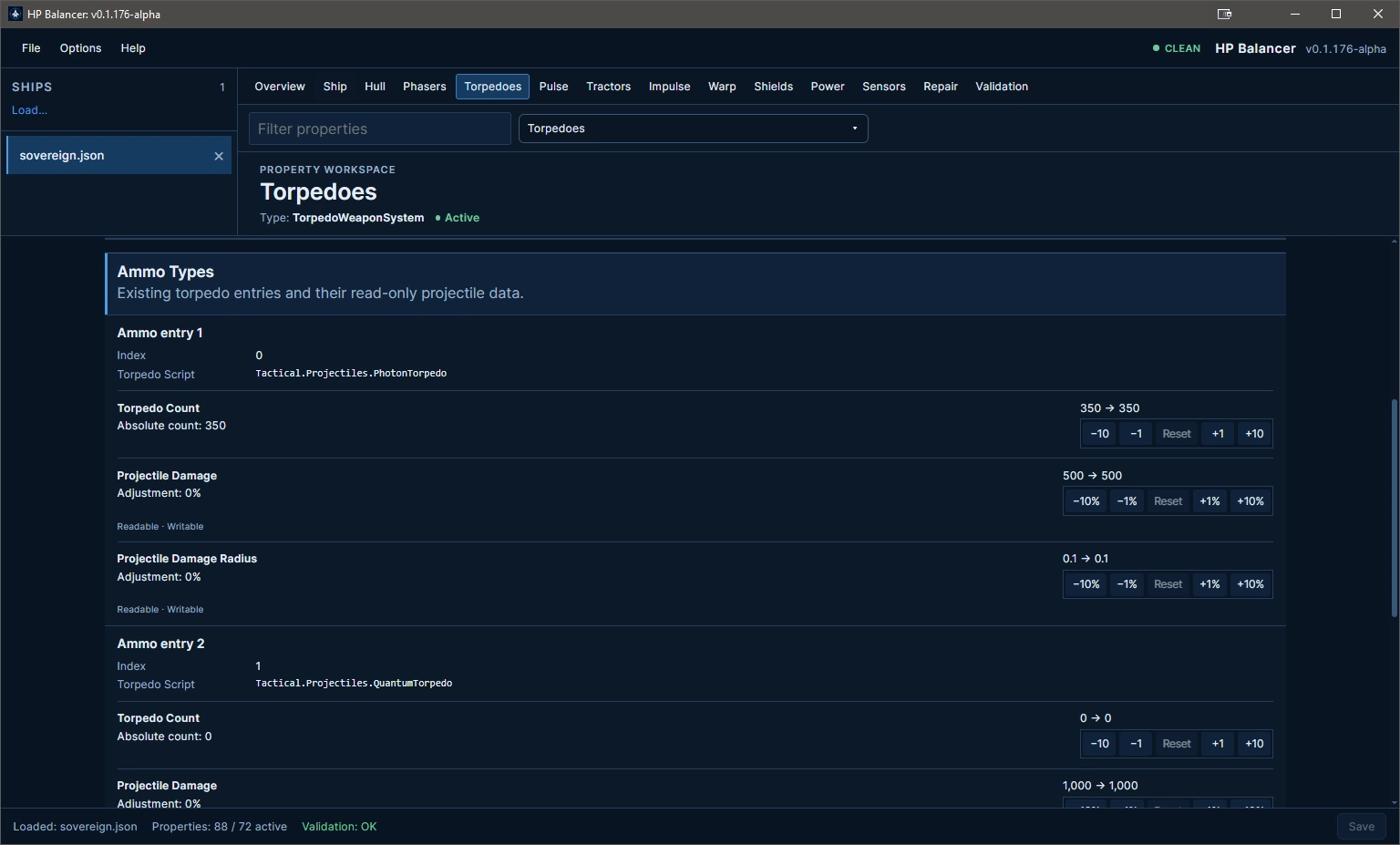
The Bridge Commander Hardpoint Balancer is a desktop tool designed to make balancing ships in Star Trek: Bridge Commander faster, safer, and far less error-prone. Instead of requiring hardpoint Python files to be edited by hand, the Balancer works through our existing Bridge Commander hardpoint CLI. The CLI converts .py, .pyc, or canonical .json hardpoint data into a structured model that the Electron application can work with, then converts the edited result back into a game-ready Python hardpoint file.
The Balancer understands the structure of a ship rather than treating the hardpoint as a flat collection of numbers. It detects related systems and repeated properties, such as multiple phasers, torpedo tubes, engines, shield values, and other grouped components. When systems share the same configuration, the editor can detect them as a matching group and apply changes across them at once. This makes bulk editing much easier while still allowing individual components to diverge when a ship needs asymmetric or intentionally different values.
Weapon balancing goes beyond the hardpoint file itself. Torpedo and pulse-style weapons can reference separate projectile Python files, so the Balancer can inspect those projectile definitions and expose the relevant damage values alongside the weapon that uses them. When a projectile value needs to change, the tool does not overwrite the shared original. Instead, it creates a ship-specific projectile clone and updates only that ship's reference, allowing projectile damage to be tuned safely without affecting every vessel that uses the same projectile.
The tool also models the ship's power system rather than exposing power values in isolation. The Overview shows continuous system demand against warp-core output, conduit capacity, main and reserve batteries, and the maximum power the ship can deliver. Projection controls model the game's operational power settings, making it possible to see how different configurations affect subsystem demand and available power. The Balancer can also simulate situational loads such as tractor beams and cloaking and estimate their effect on power endurance. This makes it possible to see not only that a value changed, but what that change actually means for the ship's power system and gameplay behavior.
The result is less of a generic property editor and more of a Bridge Commander-specific balancing workspace: hardpoint editing, grouped changes, projectile handling, shields, weapons, and power-system behavior are all presented through rules derived from how the game actually uses those values.
The HP Balancer was also developed using an AI-assisted development workflow, with AI used selectively for implementation, refactoring, testing, and other parts of the development process under human direction and review. Rather than turning this progress report into an article about AI, we'll leave the details for a separate post. Once the Balancer has gone through its first round of testing, we'll take a closer look at how it was built, where AI genuinely accelerated development, where human domain knowledge and engineering judgment remained essential, and what we learned along the way.
Screenshots


Community discussion
Comments
Comments are powered by GitHub Discussions through Giscus. They are not loaded until you choose to connect to Giscus and GitHub.